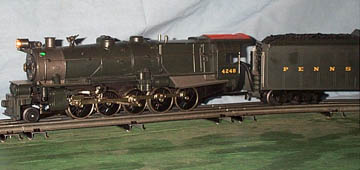
This IMHO looks at my new MTH RK Decapod!MTH PRR Decapod # 30-1176-1 July 2002
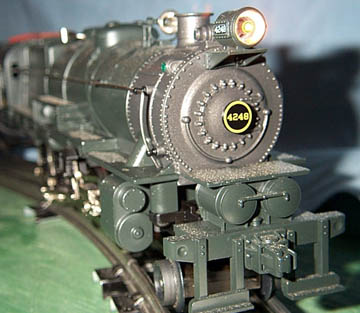
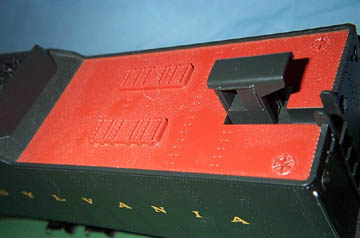
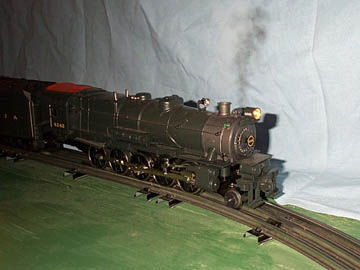
In this IMHO I will review MTH’s RK 2-10-0 PRR Decapod that I bought back in April after visiting the great layout of Larry LaJambe. After seeing his RK Challenger I knew I had to try a ProtoSound 2 engine for my pike. And since up until now the Pennsylvania Railroad had little presence on my rails I thought I’d add a Pennsy steamer to the mix. MTH has been incorporating it’s next generation of Protosounds into it’s engines for the last two and half years preparing for the day that DCS will be released. That being said a lot of the features that this engine has in conventional mode make it prize even if you never plan to buy DCS.
So how does it run? I’ll break it down into two sections, conventional and command with DCS. Either way this engine performs well with few exceptions.
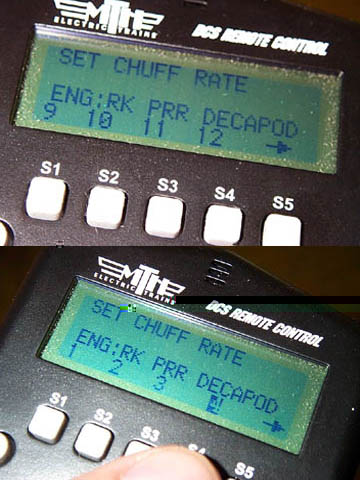
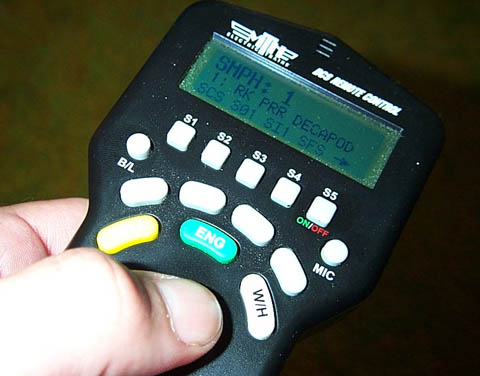
Speed control, one of the features of PS2 keeps the engine running at a constant speed regardless of incline, declines or load. The Decapod does not disappoint. The engine ran smooth at a variety of speeds with a different set of loads hooked to it. It is equipped with a precision fly wheel motor and traction tires that should give you years of maintenance free operations. Now that you have it running you may have to clear the track of livestock so blow the whistle. The whistle on the Decapod is unlike any in my roundhouse. It is very high pitched but very realistic to some of the smaller steamers I’ve heard. I don’t know if it is prototypical but I like it. Bell functions as well as PSAs are activated using the bell button and a combination with the bell whistle button. The PSA is a generic loop that I heard on Larry's Challenger. This is the one sound feature that falls short. The quality is great the dialog is fine but it sounds like the fireman and brakeman are reading from cue cards on a really bad movie set. I know it’s only toys trains but if you want to improve this is an area of improvement. The background and occasional sounds are a fine touch to the over all resonance of this engine. You would be hard pressed to find a finer engine to operate in conventional. But wait! DCS is now out so how does it work with DCS? Unbelievable. DCS takes this engine to the next level. In this part though I’m going to keep it on the basic operation as DCS has a load of features that just are too many to go through. FYI DCS is MTHs command control system. It allows multiple engines to operate on the same track independently from each other. It is quite an ambitious system that I hope to review later.
The only problem that I experienced was that my Decapod developed a binding between, as far as I could tell 3rd and the flange of the 4th driver. This caused some stalling and DCS trying to compensate. Each time I had to physically shift the engine or reverse it via the remote to clear the bind. The bind seemed to be cause by the flange of the 4th driver coming in contact with the 3rd drivers flat surface. I took a bit of emery cloth to the flange and it seems to have helped it. I also noted some rough running while in DCS control and the table seemed to shake a bit excessive. This seemed to subside as well but I am going to keep watching.
Well this is starting to get a bit
longer than most of IMHO so I’ll end it here.
For the money, MSRP was around $450 and I paid $370 I got one fine
addition to my roundhouse. The look feel and operation of this engine was very good
except for the binding I experienced. I
hope I cured it. I would highly
recommend this engine to anyone. You will be happy to have this in your
roundhouse and I look forward to having it on my pike for years to come. Like I said I could go through all the DCS features but I don’t have that kind of time so let me say this, DCS will enhanced all aspects of running the Decapod. But even in conventional mode you can’t go wrong, it is one fine item.
|



|
Email me at Marty@MartyE.com |